Why interior design is a revenue lever, not an expense
Interior design is not an aesthetic cost: it is a commercial investment with a measurable return. A polished interior acts across the whole value chain of an Airbnb. First the photos: a beautiful property produces beautiful images, which raise the click-through rate. Then conversion: a guest browsing your listing pictures their stay in the décor you show. Finally the reviews: a home that exceeds expectations on arrival generates 5-star ratings, and the Airbnb algorithm rewards those listings with greater visibility.
In Nice the stakes are amplified by competition and by the guest profile: couples, affluent families and international travellers are looking for an experience, not just a bed. A generic interior rents at the floor price; an interior with a strong identity rents for more and books faster.
The same flat, simply restyled, can justify 15 to 30% more on the nightly rate and gain several points of occupancy. It is one of the best investment-to-revenue ratios in the entire Airbnb equation.
Define a consistent style before buying anything
The number one mistake is buying furniture piecemeal, with no artistic direction. The result: a mismatched interior that tells no story. Before a single purchase, set one clear guideline and hold it across every room.
In Nice, three styles work particularly well because they match the Riviera imagination and photograph beautifully:
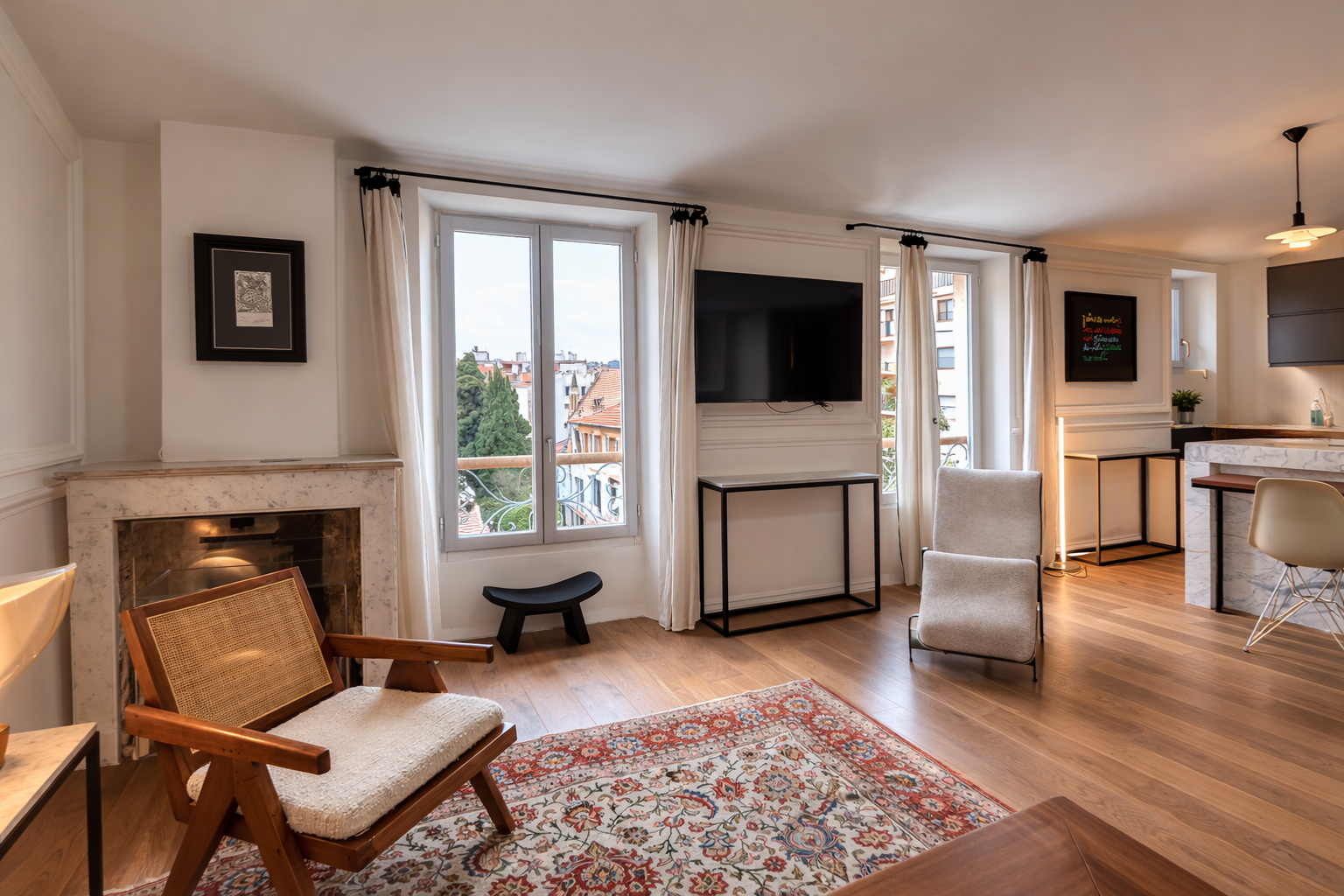
- Contemporary Mediterranean: light tones, linen, pale wood, touches of blue and terracotta, natural materials
- Riviera chic: understated elegance, velvet, brass, references to the golden age of Nice and the Belle Époque
- Calm seaside: white, beige, rattan, light, an airy and luminous coastal feel
Pick one and carry it everywhere. Consistency is what separates a 'pro' interior from an amateur assembly. Build an inspiration board (Pinterest is enough) before buying, and test every purchase against it: if it does not fit, you do not buy it.
Colours and light: play the Nice card
Nice enjoys exceptional Mediterranean light. Your interior should serve it, not fight it. Favour a light, luminous base — off-white, sand, linen — that reflects light, visually enlarges the space and makes photos shine.
On that neutral base, add controlled accent colours that evoke the region: Mediterranean blue, terracotta, ochre, olive green. Place these touches in small doses (cushions, throw, tableware, a piece of wall art) to bring the whole together without overloading it.
Care for artificial lighting as much as natural light. Banish the single, cold ceiling light: multiply warm sources (table lamps, reading lights, a string of lights on the terrace). 2700K lighting creates a warm atmosphere that reassures guests in the evening and flatters interior photos.
A dimmer in the living areas costs a few euros and transforms how the home is perceived: bright light by day, soft mood by night. It is a detail guests notice and mention in reviews.
Furniture: prioritise durable and practical
In short-term rental, furniture takes intense turnover: it must look good in photos but above all be resilient and easy to maintain. This is the classic trap: buying pretty but fragile, and replacing everything within a year.
A few principles that make the difference over time:
- Choose robust, cleanable materials: water-repellent fabrics, quality leather or faux leather, solid wood rather than cheap melamine
- Invest where it counts: bedding (mattress and linen) is the top comfort criterion cited in reviews
- Avoid very low-end furniture that ages badly and betrays amateurism in photos
- Provide comfortable seating in sufficient quantity for the advertised capacity
- Favour timeless colours for the big pieces (sofa, bed) and play with colour on easily replaceable accessories
- Think modular and compact for the studios and small flats common in Nice
Think in cost per stay, not purchase price. An €800 sofa that lasts five years costs less and generates more revenue than a €300 sofa replaced twice that devalues your photos in the meantime.
Create an identity: the 'wow' effect that triggers the booking
On Airbnb, the listings that thrive almost always have a signature element: a feature wall, a striking headboard, a staged terrace, a showcased view. It is this element that becomes the cover photo and anchors the property in the guest's memory.
In Nice, use the local context to create that signature: a terrace styled for Riviera lounging, a breakfast nook facing the light, a Provençal-inspired wall, a selection of works or photographs evoking the Côte d'Azur. The goal is for the guest to think 'I want to be there' from the very first image.
Do not neglect outdoor spaces: in Nice, a balcony or terrace, even a small one, is a major asset. A few Mediterranean plants, a bistro table and some evening lighting are enough to turn 3 m² into a decisive booking argument.
The details that earn 5-star reviews
The difference between a good Airbnb and an exceptional one often comes down to inexpensive but highly noticeable details. They turn a fine stay into a favourite, and a favourite into a 5-star review with photos attached.
- Hotel-grade bed linen and towels, white and immaculate
- Matching tableware in good condition, rather than a mismatched set
- Thoughtful welcome amenities: Marseille soap, small Provençal touches
- A well-equipped coffee/tea corner, much appreciated by international guests
- Plenty of storage and hangers, the sign of a home designed for the stay
- Confident wall décor (frames, mirrors) rather than bare walls
- Greenery (real or high-quality artificial plants) to warm up the space
These touches cost little but show immediately on arrival. They create the feeling of a 'lived-in' and cared-for home — exactly what pushes a guest to leave an enthusiastic review.
Budget: how much to invest and where to put the money
There is no need to aim for luxury to perform: aim for consistency and comfort. A smart decorative refresh of a studio or one-bedroom flat in Nice generally costs between €3,000 and €8,000 depending on the starting condition and target level, excluding large furniture already in place.
The allocation rule that works: put the money where the guest feels and sees it. Concretely, prioritise in this order:
- Bedding and sleeping comfort (comfort = reviews): this is the number one item
- The living areas visible in the lead photos (living room, terrace, kitchen)
- Lighting and textiles, which transform the atmosphere on a modest budget
- Accessories and wall décor, high visual impact at low cost
- Last, the low-visibility, low-differentiation elements
This investment generally pays for itself within a few months thanks to the higher nightly rate and occupancy. It is one of the best-returning expenses in the whole life cycle of an Airbnb.
Design mistakes that sink a listing
Some mistakes come up constantly and sabotage properties that could have thrived:
- An interior that is too personal or dated and does not speak to the guest
- The fully mismatched look: furniture accumulated with no guiding line
- Bare walls and cold lighting that make photos look sad
- Low-end furniture that ages badly and betrays amateurism
- Too much furniture in small spaces, crushing the room
- No local identity when the Riviera is an obvious selling point
- Neglecting outdoor spaces (balcony, terrace), which are decisive in Nice
Fixing even half of these points is often enough to relaunch a listing. Interior design is not a finishing touch: it is a direct commercial lever, on a par with photos or pricing.
Delegating the design of your interior
Defining a style, selecting durable furniture, creating a signature, staging for photos: all of this takes time, a trained eye and a good understanding of what Nice guests expect. For many owners, delegating this to a concierge that also manages the listing and the photos is the most rational option.
Interior design fits naturally into our Airbnb listing optimisation work in Nice: layout, staging, professional photo shoot and image ordering. To understand how we take full charge of your property, see our Airbnb concierge service in Nice, or simply request a free revenue estimate.